
EXECUTIVE SUMMARY
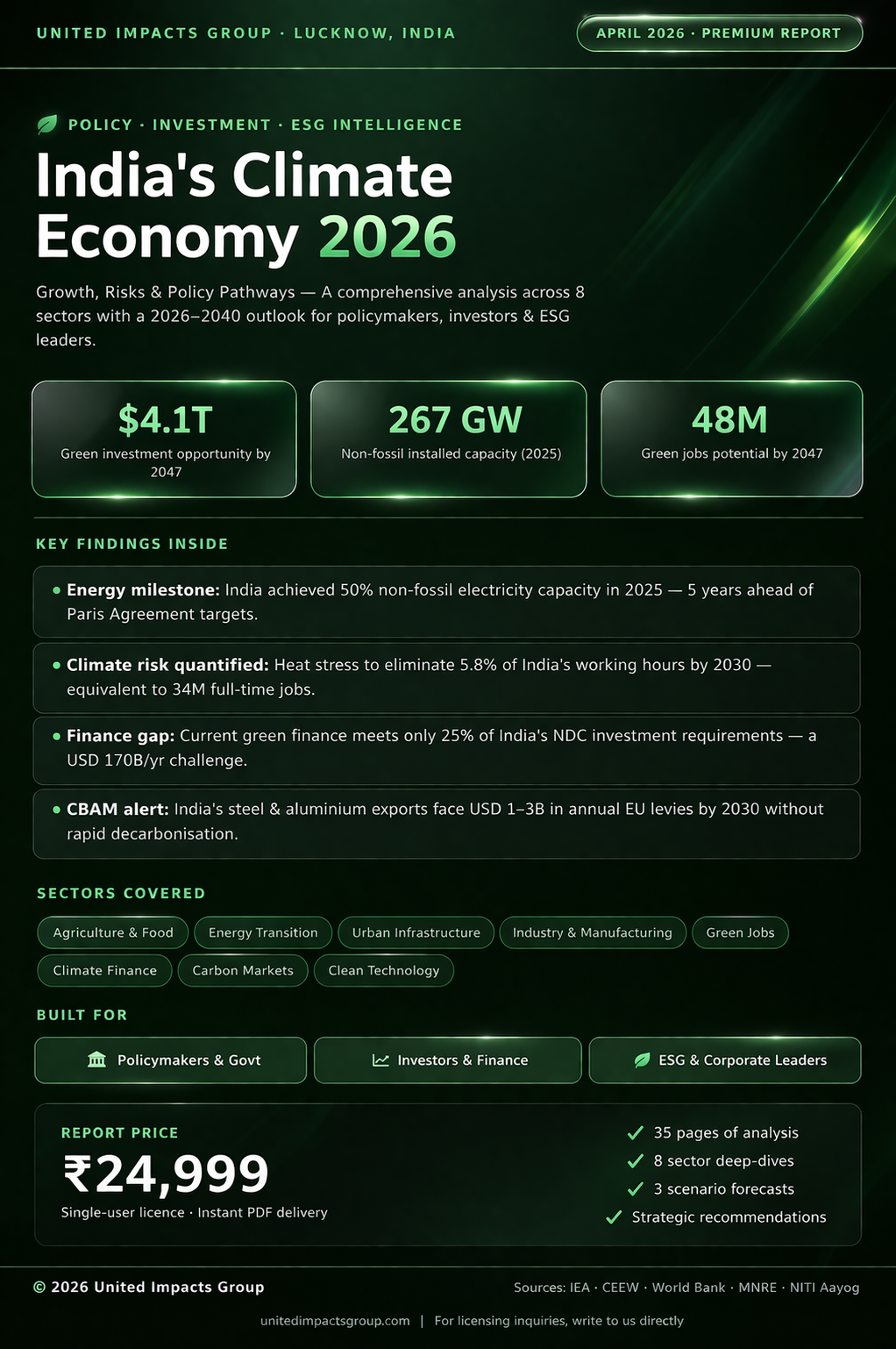
India’s climate-economy nexus is entering a phase of rapid transformation. This report presents a data-driven assessment of emerging risks, sectoral shifts, and investment opportunities shaping India’s climate economy in 2026.
Key Indicators
- 6–7% India’s GDP Growth Rate (FY2026 Forecast)
- 267 GW Non-Fossil Installed Capacity (2025)
- $4.1 Trillion Projected Green Investments by 2047
- 50% Non-Fossil Share of Power Capacity
- 35M+ Green Jobs (2026 Estimate)
- $2.5 Trillion Climate Finance Required (2015–2030)
Critical Findings
Climate Risk Is an Economic Risk
India faces rising economic losses from climate impacts, including productivity declines due to heat stress and agricultural yield disruptions affecting food systems and rural livelihoods.
Energy Transition Is Accelerating
India has achieved 50% non-fossil capacity ahead of schedule, with rapid renewable expansion signalling a structural shift in the energy landscape.
Green Economy Opportunity Is Expanding
India’s climate economy is emerging as a major investment destination, driven by clean energy, sustainable finance, and innovation ecosystems.
Policy Momentum Is Building — But Gaps Remain
While policy frameworks are strengthening, financing gaps and fossil dependency continue to pose structural challenges.
What This Means for Decision-Makers
For Investors:
Strong opportunities across renewable energy, EVs, green hydrogen, and climate finance, supported by government incentives and policy support.
For Policymakers:
Urgent need to align fiscal policies, scale climate finance, and accelerate transition planning.
For ESG Leaders:
Regulatory shifts and market mechanisms are creating both compliance requirements and strategic advantages.
Access Full Report
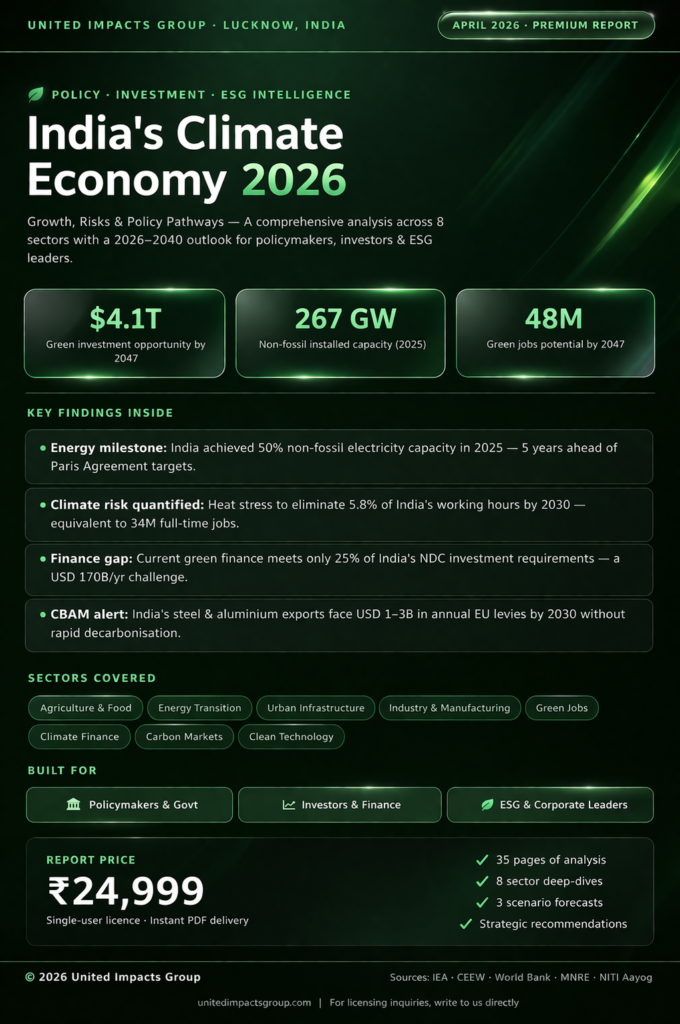
Unlock Complete Insights, Data & Policy Recommendations | Full Report: ₹24,999 ($268)
📩 The full report will be shared via email upon successful payment confirmation
No Responses